ceremony and conduits

Sometimes you read a request for submissions and just know you have found kindred spirits. Such was the case when I received the call for Volume 12, Number 1, The Braided Gift.

The ritual of ceremony has been on my mind since a recent conversation with a friend – a yoga teacher and musician returning from a journey to the Badlands. She encountered garnet in the mountains there, that stone that can resemble the seeds of a pomegranate. What is our fascination with stones? To me, it feels like they hold so much time inside. They are doorways into another dimension.

The Plumwood Mountain Journal is an Australian and International Journal of Poetry and Ecopoetics. Their most recent submission call was written by the issue’s esteemed guest editors: Shari Lynell, author of Foxstruck and Other Collisions and The Semiotics of Arrival, and Lucy Van, a poet listed for the Stella Prize and Mary Gilmore award. They quote Kimmerer: “You start to remember things you didn’t know you’d forgotten. Our elders say that ceremonies are the way we ‘remember to remember,’” (5).

May we all remember.

every unknown wanderer

This past week the poet and novelist Ben Lerner spoke with the students of SUNY New Paltz about his work.  Lerner is the poetry editor for Harpers, and the previous poetry editor for Critical Quarterly.  He is also currently a professor at Brooklyn College, and has taught at The University of Pittsburgh and California College of the Arts.  His latest book is The Lights (2023). 

Lerner discussed, in his terms, “the dramas of repurposing language and recontextualizing language.” (1)  I was first introduced to Lerner through his poetry book Angle of Yaw, published in 2006 by Copper Canyon Press.  The “angle of yaw” is the angle between the direction of travel and the direction of wind, specifically the rotation around the vertical axis (picture shaking your head no).  

Continue reading “every unknown wanderer”

birth-stone to head-stone

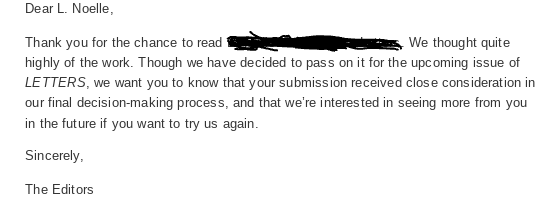
Sometimes a good rejection is the highlight of your day, and it was for me a couple of days ago.

Letters Journal is supported by the Yale Institute of Sacred Music (ISM), and a dream spot of mine to be published in. Read it here.

 “What logos lights the filament of time, / Carbon arc fusing birth-stone to head-stone?” (Jean Valentine, “Afterbirth”).

These little deaths we dance our way through, that is where we find our value.

Moonstone Arts Center Reading

I’ve always been taken in by the beauty of other languages. I’m so charmed by accents and unfamiliar turns of phrase. In my twenties I would listen to recordings of Czechs speaking during my commute to the university and back, in an attempt to better navigate Prague when I would visit in the winters. (I should clarify the successful communication was mostly due to my multilingual friends who worked for the United Nations at the time, and not my very sincere and very flawed version of things…thank you Magdalena and Lucia!) But I was fascinated by the way the consonants all seemed to smash together, the way they could go on for some time before the introduction of a vowel (zmrzlina, for instance, is the word for ice cream).

When we were younger my sister and I rode the metro in Paris, our pronunciation better than our memories for the vocabulary we had learned back in school (“I think I just asked him how far is it to my foot…”.) Another one of my sisters sends me elegant little handwritten notes in Irish, a language as unfamiliar to me as the Japanese she is teaching her daughter to speak. I loved Southern Spain for the crossroads of different cultures, being so close to Morrocco. I stayed with freinds who had lived and worked in Palestine previously, Germany prior to that. I studied Italian during the lockdown, wishing I had learned it when my grandfather was still alive to speak it.

This Sunday February 26 I will be reading some poetry I have in the forthcoming anthology Love in the Original Language. If you’re unfamiliar with Fiona Bolger, you can read a little about her and her passion for languages in World Literature Today. I think that love is a language unto itself, and a very old one at that. Language learning is sparked by connections, and by listening, as is love.

Sunday February 26, 2023 – 2pm
VIRTUAL REGISTER @
https://us02web.zoom.us/meeting/register/tZwpfuiqqz8qGNPXE20VPIAeJq2jrFQlFQoj
LOVE
(in the Original Language)
Inspired by Fiona Bolger’s book Love in the Original Language–poems that inspire a love for the dignity of what is original and human – cross the borders of meaning, territory and flesh itself
Flamenco, fire, and garden dieties

These are all some of my favorite inspirations, and also examples of some of the subject matter found in this issue of Advaitam Speaks Literary.

The landing page is my bio, please flip the page to read the two pieces I had featured here, as a couple of examples of my older work.

The auditory quality of my poetry is very important to me; I am guided more by sound than the sight or technical suggestion of particular words. When I set out to write a thing, it is largely a concerted listening that takes place.

Continue reading “Flamenco, fire, and garden dieties”

overstory notes

283 ecosystems tend toward diversity and markets do the opposite

285 people aren’t the apex species they think they are

295 riding the wild bends, sempervirens

304 hopelessness makes them determined

312 it’s like i had the word book and then you put one in my hands

314 like the angel at Eden’s east gate who kept the humans, poachers of one forbidden tree, from breaking back into the garden and eating the other fruit that would have solved everything

Continue reading “overstory notes”