For 20 years SAGE Magazine has been an important intersection for the arts and environmentalism.
Continue reading “SAGE”
For 20 years SAGE Magazine has been an important intersection for the arts and environmentalism.
Continue reading “SAGE”
Sometimes you read a request for submissions and just know you have found kindred spirits. Such was the case when I received the call for Volume 12, Number 1, The Braided Gift.
The ritual of ceremony has been on my mind since a recent conversation with a friend – a yoga teacher and musician returning from a journey to the Badlands. She encountered garnet in the mountains there, that stone that can resemble the seeds of a pomegranate. What is our fascination with stones? To me, it feels like they hold so much time inside. They are doorways into another dimension.
The Plumwood Mountain Journal is an Australian and International Journal of Poetry and Ecopoetics. Their most recent submission call was written by the issue’s esteemed guest editors: Shari Lynell, author of Foxstruck and Other Collisions and The Semiotics of Arrival, and Lucy Van, a poet listed for the Stella Prize and Mary Gilmore award. They quote Kimmerer: “You start to remember things you didn’t know you’d forgotten. Our elders say that ceremonies are the way we ‘remember to remember,’” (5).
May we all remember.
New post up now at The Bookends Review.

Soundings East is a beautiful and brave publication run by Salem State University Press. My piece “Psalm Ambulista” was accepted to be printed in the Spring 2025 issue (Soundings East Volume 47), but I had to pull out because I had just signed over first serial rights elsewhere. If you are looking for a good old fashioned literary magazine – full of varied, prescient and insightful voices – with just the right weight to hold in your hand, I highly recommend this imprint.
It starts off with Richard Hoffman’s heartbreaking essay, beginning with his personal memories of Mosab Abu Toha singing with him, and his confrontations with the narratives of warlords. It continues with Stephanie Saywell’s confrontations with self. It leaves us with Malak Mohammad Al-Hessi’s haunting photo of The Great Omari Mosque in Gaza.
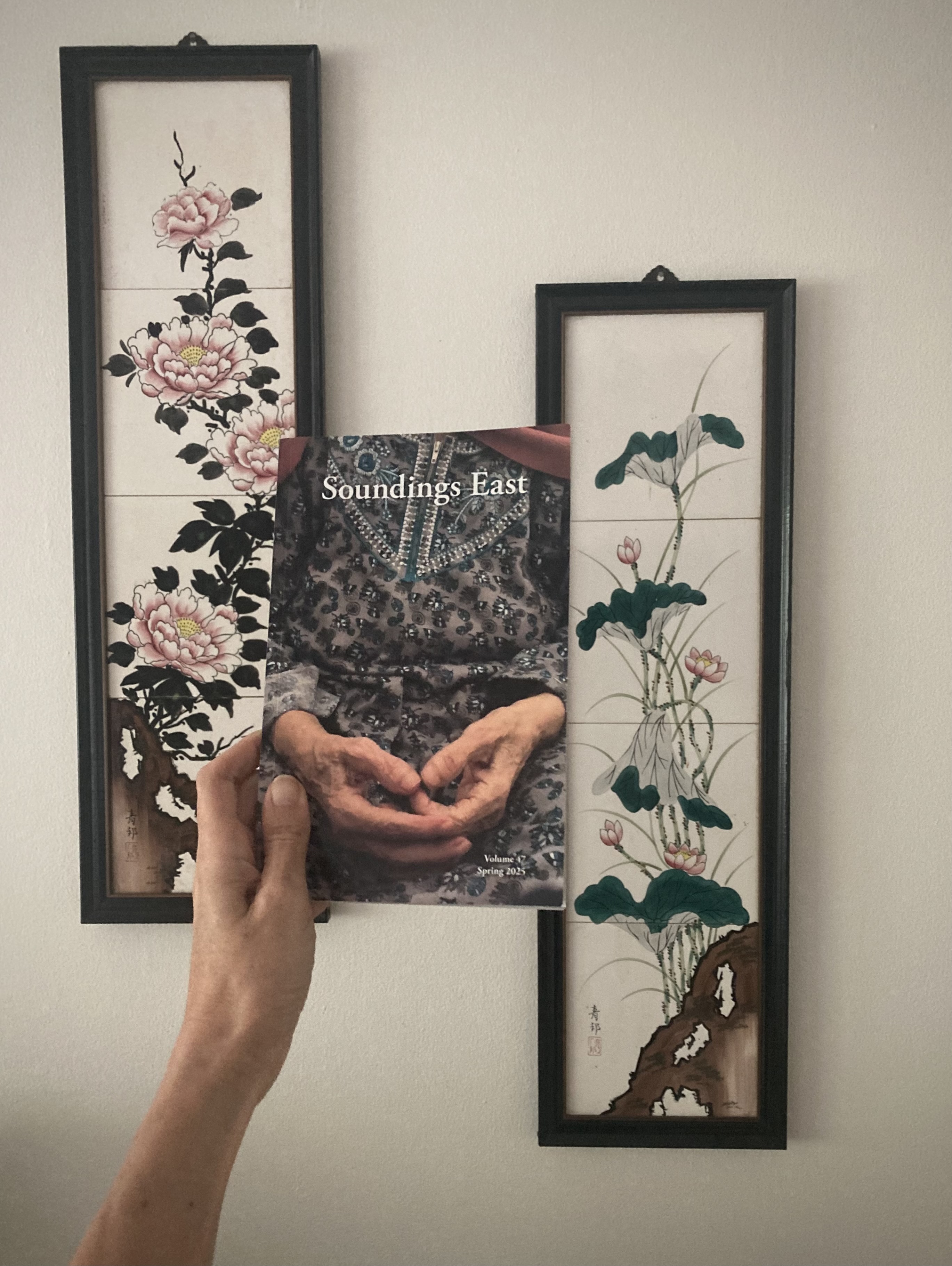
I used to sell zines of mine in the local bookstores with staples in them and my journal scribbles photocopied in black and white at the library. Maybe to a fault, I tend to equate a certain polish with insincerity. This book looks good on a shelf, but its real beauty lies with the words inside.
Oxford defines sounding as the action or process of measuring the depth of the sea or other body of water. A fitting title for a fine publication.
This past week the poet and novelist Ben Lerner spoke with the students of SUNY New Paltz about his work. Lerner is the poetry editor for Harpers, and the previous poetry editor for Critical Quarterly. He is also currently a professor at Brooklyn College, and has taught at The University of Pittsburgh and California College of the Arts. His latest book is The Lights (2023).
Lerner discussed, in his terms, “the dramas of repurposing language and recontextualizing language.” (1) I was first introduced to Lerner through his poetry book Angle of Yaw, published in 2006 by Copper Canyon Press. The “angle of yaw” is the angle between the direction of travel and the direction of wind, specifically the rotation around the vertical axis (picture shaking your head no).
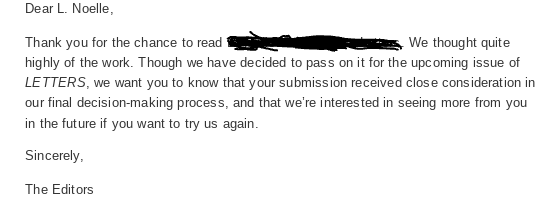
Continue reading “every unknown wanderer”Sometimes a good rejection is the highlight of your day, and it was for me a couple of days ago.
Letters Journal is supported by the Yale Institute of Sacred Music (ISM), and a dream spot of mine to be published in. Read it here.
“What logos lights the filament of time, / Carbon arc fusing birth-stone to head-stone?” (Jean Valentine, “Afterbirth”).
These little deaths we dance our way through, that is where we find our value.
New work forthcoming from The Bookends Review.
Forthcoming from Querencia Press
An exerpt from a story of mine from 2022:
When I walked there it was always in a circle, for it was laid out that way, like a ritual. The pines would get pushed around by the wind like the little lights atop ten thousand candles, and that is where I would bring my questions, I would bring my questions to the field and she would answer me, sometimes immediately, in lively conversation, sometimes slowly and over a season or so.
Continue reading “the pines”new work forthcoming from The Sunlight Press
 l noelle mclaughlin